


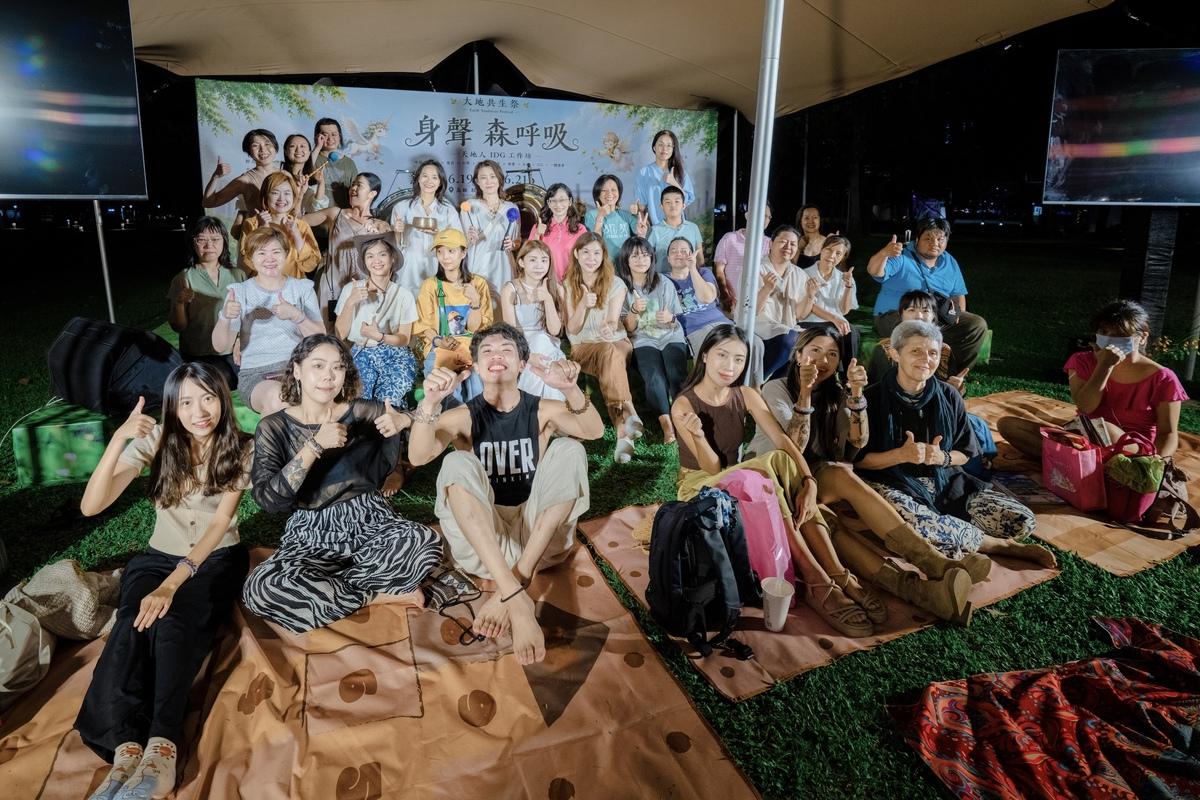
As extreme rainfall, heatwaves, and droughts become increasingly frequent, climate change is quietly reshaping our daily lives and health. From June 19 to 21, the Aerosol Science Research Center (ASRC) at National Sun Yat-sen University (NSYSU), in collaboration with Shinsekai Wellness Space, Outdoor Ideas, and the Taiwan Kaohsiung IDG Hub for SDGs, hosted the "Earth Coexistence Festival: Breath, Body, Forest—Heaven, Earth, and Humanity IDG Workshop" at Dayi Park in Kaohsiung's Pier-2 Art Center. Through immersive experiences in science, art, and music, the event invited the public to rediscover the most essential, yet often overlooked, part of everyday life: breathing.
Centered on the theme of breathing, the festival connected air, land, oceans, and human life through a diverse program that included family-friendly science activities, science picture books, educational board games, free lung function testing, hands-on air quality monitoring, lawn concerts, and interdisciplinary artistic performances. Through hands-on experiences and playful exploration, participants were encouraged to better understand the close relationship between environmental change and human health.
Professor Chia C. Wang, Director of the Aerosol Science Research Center at NSYSU, noted that although people breathe more than 20,000 times a day, few stop to consider what is actually entering their bodies with every breath. Suspended particles in the air, together with bioaerosols such as pollen, bacteria, and viruses, are all forms of aerosols. They not only affect air quality and climate, but are also closely associated with respiratory diseases, allergies, and even systemic illnesses involving the cardiovascular system, liver, and kidneys. Understanding the air we breathe is therefore one of the most important steps toward understanding the close relationship between ourselves and the environment.
To make science both engaging and accessible, the festival featured the AeroUnicorn Breathing Classroom, where visitors could explore aerosol science through a variety of interactive activities. Participants learned how viruses spread through the air by reading the ASRC's original science picture book, The Quest of The Virosols, which has been translated into 20 languages. They also discovered air quality concepts through the educational board game Air, Don't Cry: Fighting for Clean Air and the interactive pinball game The Adventure of PM2.5 to Human Body. These hands-on activities transformed complex environmental science into enjoyable learning experiences for visitors of all ages. The Sustainable Heartland exhibit further integrated the Sustainable Development Goals (SDGs) and Inner Development Goals (IDGs), encouraging participants to reflect on how personal actions can contribute to a more sustainable future.
In addition to science education activities, the festival offered free lung function testing conducted by the research team led by Assistant Professor Ya-Yun Cheng of NSYSU's School of Medicine. Participants were able to gain a better understanding of their respiratory health through on-site assessments. The event also showcased AIoT-enabled smart air quality monitoring technology developed by ASRC's industry partner, Green Ideas Synergy Inc., providing real-time measurements of the surrounding air. By making invisible changes in air quality visible, the technology helped raise public awareness of the importance of respiratory health.
The festival also featured a three-part interdisciplinary lecture series themed around Body, Sound, and Nature. Professor Wang presented The Science of Breathing and the IDGs, introducing the scientific connections between breathing and sustainable development. Assistant Professor Yi-Hsuan Chen from NSYSU's Department of Music demonstrated how invisible sound waves can be transformed into immersive artistic experiences. Associate Professor Elaine Ho from the Department of Theatre Arts and healing musician Chi-Hsin Chen guided participants in exploring deeper connections between people and the environment through the sounds of plants and the rhythms of nature.
As evening fell, Dayi Park transformed into an open-air concert venue for the Heaven, Earth, and Humanity Lawn Concert. Featuring a rich blend of musical traditions from around the world, the performances incorporated the violin, cello, gong, singing bowls, handpan, didgeridoo, African drums, and monochord, creating an immersive atmosphere where nature and music came together. The festival concluded with a special performance led by Professor Hung-Chun Lin from NSYSU's Department of Music and her students, offering audiences a musical celebration in honor of the summer solstice.
NSYSU emphasized that addressing the challenges of climate change requires not only cutting-edge scientific research and technological innovation, but also active public participation. As one of the few large-scale outdoor science outreach events in Taiwan, and perhaps worldwide, to combine aerosol science, lung function testing, air quality monitoring, ecological art, and live outdoor music, the festival sought to inspire a broader understanding that breathing is more than a physiological process. It is a shared language that connects people, the environment, and the Earth's systems. By learning to breathe with greater awareness, we also learn to live in greater harmony with one another, with nature, and with future generations, planting new possibilities for a more sustainable future.
.jpg)
.jpg)
.jpg)
.jpg)
.jpg)
.jpg)
.jpg)
.jpg)
.jpg)
.jpg)
.jpg)
.jpg)
.jpg)
.jpg)
.jpg)
.jpg)
.jpg)
.jpg)
.jpg)
.jpg)
.jpg)

.jpg)
.jpg)